






About Me
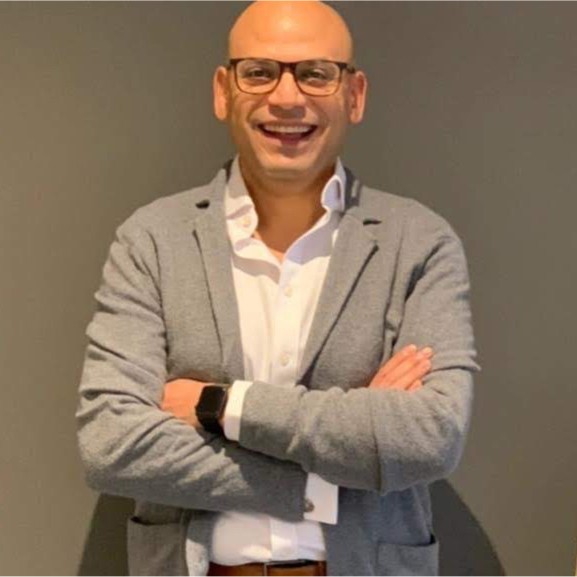
Walid El Sayed Aly
Cloud & Platform Engineer for AI Workloads | Kubernetes · vLLM · GPU Scheduling · EU AI Act | Limburg an der Lahn · Frankfurt · Mainz · Koblenz · Hessen · DeutschlandCloud & Platform Engineer with 15+ years in Enterprise IT — currently building an open specialization in Platform Engineering for AI workloads.
Current focus (builds in public on wesa.dev):
Making GenAI production-ready for Java/Spring enterprises in regulated industries. Specifically:
- LLM serving on Kubernetes (vLLM, LiteLLM, Triton)
- GPU scheduling — NVIDIA GPU Operator, Karpenter, MIG
- RAG infrastructure — Qdrant, embeddings, rerankers
- Multi-tenant cost tracking per token for LLM platforms
- GDPR-compliant self-hosting + practical EU AI Act application
Backing:
20+ cloud migration and DevOps transformation projects at 1&1, Deutsche Telekom, Deutsche Bahn, Lufthansa, and LR Health & Beauty. Up to 30% faster deployments and significant cost reductions in AWS and Kubernetes operations.
Why this combination:
Cloud-native + Enterprise Java + compliance is a rare mix in the German market. AI hype profiles lack Kubernetes. Cloud-native profiles lack Spring. I build both — production-ready, documented, without buzzwords.
Approach:
Instead of LinkedIn slides and architecture PowerPoints, I publish Helm charts, Terraform modules, and honest write-ups on wesa.dev. What works gets shown. What doesn't work gets documented just as openly.
If you want to integrate GenAI into your existing Java or cloud stack — GDPR-secure, self-hosted, or hybrid — let's talk.
- Birthday:26.02.1980
- Age:46
- Address:Limburg an der Lahn, Germany
- Nationality:German
- Study:University of Applied Sciences, Worms
- Degree:Master
- Interest:Running | Reading | New Technologies | AI
- Freelance:Available
Programming Skills
Language Skills
Knowledge
 Cloud Architektur Module | Amazon Web Services | Microsoft Azure
- IaaS Infrastructure as a Service / Containers Orchestrierung & Microservices
- Kubernetes | Helm | Rancher | Instana | Docker
- Datenvisualisierung & Monitoring | Grafana | Prometheus | Kibana | Graylog
- Streaming / Message Broker
- Infrastruktur-Provisioning | Terraform | Ansible
- Build-System | Jenkins | GitLab CI/CD | GitHub Actions
Interests
- IT-Management | IT-Strategie
- Mobile App
- Web Development
- AI & Machine Learning
- IoT & Smart Home
Education
- 10.2005 – 02.2010
University of Applied Sciences, Worms, Germany
Diplom-Informatiker - 10.2000 – 07.2001
Alexandria University, Egypt
Communication Center, Telecommunications course - 09.1993 – 07.1997
Upper secondary school, Alexandria, Egypt
High school diploma
Experience
- 01-2022 - Now
LR Health & Beauty Systems, Ahlen, Germany
Software Architect / Lead Software Developer - 07.2019-12.2021
Deutsche Bahn / DB Systel, Frankfurt Niederrad, Germany
Lead Software Developer / Product Owner - 01.2019-06.2019
Trusted Shops GmbH, Cologne, Germany
Lead Software Developer - 11.2013 - 12.2018
1&1 Internet AG, Montabaur, Germany
Software Developer - 06.2013 - 10.2013
Lufthansa Technik, Hamburg, Germany
Scrum Master/ Software Developer - 07.2012 - 05.2013
Telekom AG, Darmstadt, Germany
Software Developer
Sixteen years, told properly
The table above has the dates. This is what the work actually was, and what each station left behind — because the through-line matters more than the chronology. Enterprise Java, then cloud-native infrastructure, then regulated environments, and now AI platforms is not a series of pivots. Each one made the next one possible.
LR Health & Beauty Systems, Ahlen · 2022 – today
Software Architect / Lead Software Developer
E-commerce platform work in Java 21 and Spring Boot 3 — payment integration, a new gateway service, and the long-running job of pulling a grown monolith apart into services that can be deployed independently. The part I would highlight is not the architecture diagram but the sequencing: which piece you extract first decides whether the remaining eighteen months are pleasant or miserable.
Deutsche Bahn / DB Systel, Frankfurt · 2019 – 2021
Lead Software Developer / Product Owner
Kafka brokers, Helm, GitLab CI and Kubernetes in an environment where downtime is not an abstraction. Also where I learned most about operating infrastructure other people depend on: the interesting failures were rarely in the code, they were in configuration drift, in what happens during a rolling update, and in whether anyone had thought about the first ten minutes of an incident.
Trusted Shops, Cologne · 2019
Lead Software Developer
A short engagement in a high-traffic consumer platform. Brief, but a useful contrast to enterprise work — the feedback loop between a deploy and knowing whether it was a good idea is measured in minutes rather than quarters.
1&1 Internet, Montabaur · 2013 – 2018
Software Developer
Five years in large-scale hosting and telco systems. This is where the cloud and automation work started in earnest, and where I stopped believing that anything manual stays manual for long — every process someone performs by hand twice a week eventually becomes an outage.
Lufthansa Technik, Hamburg · 2013
Scrum Master / Software Developer
Aviation maintenance software, and a first look at what regulated engineering actually demands: traceability, documentation and change control as part of the work rather than paperwork bolted on at the end. That perspective turned out to be directly transferable to EU AI Act work thirteen years later.
Deutsche Telekom, Darmstadt · 2012 – 2013
Software Developer
Enterprise Java in a large telco. The first place I saw how much of a big organisation's software cost is not development but coordination — and how much of that is a solvable problem rather than a fact of nature.
Why AI platforms, and why now
Because the gap is obvious once you have worked on both sides of it. The people who understand Kubernetes and GPU scheduling largely do not come from enterprise Java, and the people maintaining Germany's Spring estates are not the ones being handed GenAI budgets. Somebody has to make those two worlds talk, and the requirements that make it difficult — GDPR, EU AI Act, air-gapped operation, auditability — are the requirements I have spent most of my career inside.
I am open about the fact that the AI specialisation is the newest layer. It is being built deliberately and in public: what I learn about vLLM, GPU operators, RAG and the EU AI Act gets written up as I go, on this site and on GitHub, including the parts that did not work. That seems more useful than a certificate.